Press Release · Vadzo Imaging
Vadzo Imaging Validates Innowave-821CRS: Onsemi AR0821 8.3MP Dual Interface Camera for Flexible Ethernet and Wireless Integration in Embedded Vision Systems
Distributed by Jared Tech · Originally issued via Newswire
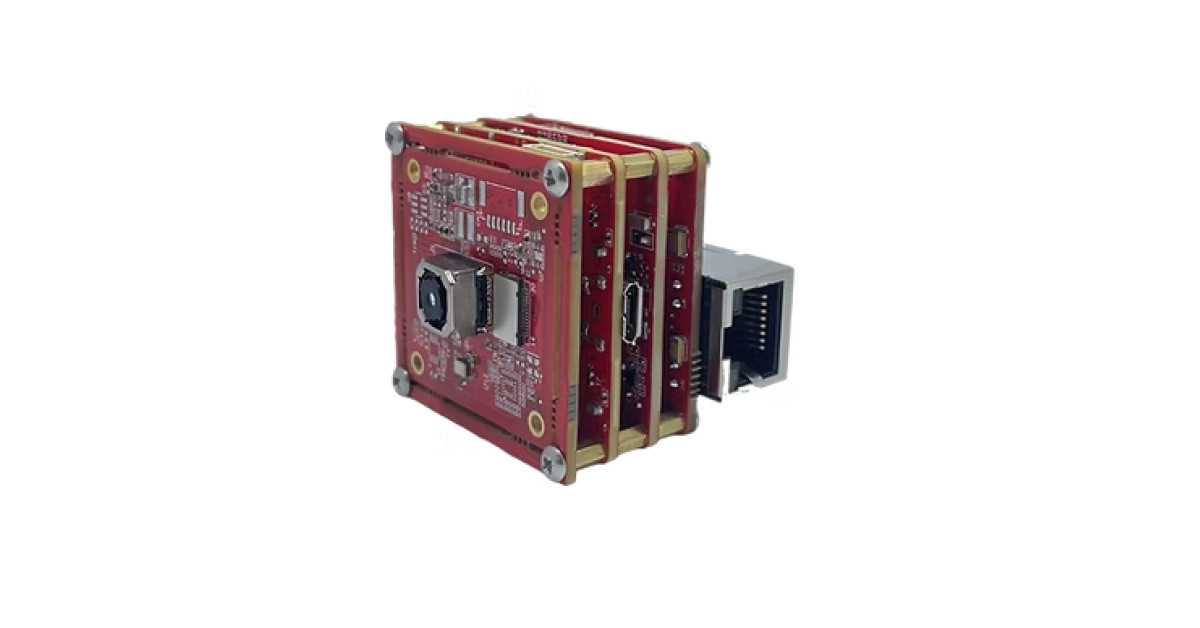
FORT WORTH, TX, November 25, 2026 (Newswire.com) - Vadzo Imaging, a provider of embedded vision camera products for OEMs and system integrators, today announces validation of the Innowave-821CRS, an 8.3MP Dual Interface Camera built on the Onsemi AR0821 sensor. The camera combines switchable Ethernet and dual-band Wi-Fi with DR-Pix dual conversion gain, embedded HDR, PoE, ONVIF, PTP, and an M12 lens mount with an electromechanical IR cut filter. Vadzo presents an AR0821 GigE WIFI Camera and an 8.3MP GigE WIFI Camera for inspection, surveillance, city, robotics, and healthcare systems, with guidance on network choice, dynamic range, and low light.
Why an 8.3MP Dual Interface Camera Fits Real Networks and Real Light
Network design and image quality seem unrelated, and in practice they meet in every deployment. A camera that works well on a bench with a gigabit cable meets a wireless corridor, a switch with no spare port, or a pole with only a radio link, and the installer improvises. Every improvisation costs time, and every special case becomes a variant of the product to stock, test, and support. A dual interface camera removes the variants, since one unit serves the cabled station and the wireless position, and it keeps the radio available as a backup when a cable fails.
Light is the second problem, and the 8.3MP class makes it sharper. Embedded scenes mix a bright window with a dark corner, a sunlit road with a shaded underpass, and a lit panel with a shadowed instrument, often in the same frame. A conventional sensor chooses one end and loses the other. Several techniques widen the range, and each has a cost. Combining several exposures widens it and can ghost moving subjects. Dual conversion gain widens it inside the pixel with a smaller penalty. Binning trades resolution for sensitivity in dim scenes. A designer needs to know which techniques a camera offers, and what each costs, to choose among them.
Integration adds more points. Embedded systems and larger installations want standard software to discover the camera without custom code, synchronized clocks across several units, one cable for data and power where a cable exists, and lenses that suit the field of view of the task. A camera that offers these things saves integration effort, and a camera that lacks them shifts the effort to the integrator. Teams that choose a camera for its sensor and discover the network needs later must redesign after the hardware is built.
Security and reliability complete the list. A camera on a wireless link joins a network that other devices share, so it must support current Wi-Fi security, and it should sit on a separate segment from business systems. A wired link gives steadier bandwidth and timing. The design should decide which link carries the video, which carries the setup, what happens when one fails, and how the camera is found again. Treating those questions at the start gives an installation that survives the first outage.
How an 8.3MP Dual Interface Camera Combines Wired and Wireless Links with Wide Dynamic Range
The Innowave-821CRS is built on the Onsemi AR0821, an 8.3MP color CMOS sensor with a maximum resolution of 3848 x 2168 pixels and 2.1-micron back-illuminated pixels. Those figures give an array of about 8.1 by 4.6 millimeters, with a diagonal of about 9.3 millimeters, which is a generous size for an embedded 4K-class camera, and large pixels collect more light than the small pixels of many sensors of this resolution. The sensor uses DR-Pix dual conversion gain technology. Each pixel can convert its collected charge to voltage with two different gains. The high gain gives low noise for dim signals, and the low gain handles bright signals without saturating. Combining the two readings inside the pixel gives a wide range from a single exposure, which avoids the motion mismatch of exposures taken one after another. The brief describes embedded HDR above 140 dB through in-pixel processing, a ratio of more than 10 million to 1, and teams should confirm the figure and the method against the product documentation.
The sensor family also offers several HDR modes, including a 3-exposure HDR, a 4-exposure eHDR, and line interleaved HDR, and the brief says these are subject to camera implementation, so the camera may expose only some of them. Their costs differ. Exposures taken one after another can show ghosts or color fringes on moving subjects, and more exposures extend the range further. For example, if each step between exposures is a factor of 16, three exposures span a factor of 256, about 48 decibels beyond the range of one. Line interleaved HDR alternates two exposure settings across the rows of one frame, which avoids ghosting at the cost of some vertical detail. Teams should record the real scene in each mode that the camera offers, with moving subjects included, and choose the mode that gives the best result.
Binning is the tool for dim scenes. Combining each 2 by 2 block of pixels into one gives an output of about 1924 by 1084 pixels, about 2.1MP, with an effective pixel of 4.2 microns, four times the area. Four times the signal means about twice the signal-to-noise ratio when shot noise dominates, a gain of about 6 decibels, at the cost of resolution. The brief also lists scaling and mono summing, subject to camera implementation. A system can use full resolution by day and binned output at night, or use binned output for fast detection and full resolution for a crop, and teams should confirm which of these the camera offers. An electromechanical IR cut filter, with an M12 lens mount, blocks infrared by day for true color and moves aside at night.
The dual interface needs a design plan. The camera offers switchable 100Base-T and 1000Base-T Ethernet and dual-band Wi-Fi with 802.11a, b, g, n, and ac. A compressed 4K stream commonly needs about 20 to 30 megabits per second, an illustrative range that depends on the codec and the scene. The 5 GHz band offers a practical throughput of a few hundred megabits per second on a good link, shared among everything on that access point, and the 2.4 GHz band offers less and is more crowded, so a few camera units can fill a channel. The 2.4 GHz band reaches farther and passes through walls better, and the 5 GHz band is faster and cleaner. A cable gives steady bandwidth and the best timing. A sound plan puts video on the cable where one exists, uses the radio for positions without a cable and as a backup, and tests the failover by unplugging the cable on purpose.
Several features support the integration. ONVIF compliance lets standard video management software discover the camera and use its video without custom code. IEEE 1588 PTP aligns the camera clock with a network time source for multi-camera synchronization, and it performs best on the wired link because wireless delay varies. PoE at 802.3af delivers about 12.95 watts at the device over the same cable that carries the data, which simplifies mounting, while Wi-Fi carries no power, so a wireless-only position needs its own supply. On the wireless side, current security settings, a separate network segment, and managed credentials matter, and the camera should be tested after a router or password change. Teams should confirm the ONVIF profiles, the PTP profile and timestamp method, and the PoE class against the product documentation.
The lens turns the large array into a useful field of view, and a worked example shows the trade-offs. The 3848 pixels across the sensor, at 2.1 microns each, span about 8.1 millimeters. A lens of 4 millimeters gives a horizontal field of view of about 91 degrees, which at a distance of 10 meters covers a width of about 20 meters, with each pixel covering about 5 millimeters, so a license plate 0.3 meters wide spans only about 57 pixels. A lens of 8 millimeters narrows the view to about 54 degrees and a width of about 10 meters, so each pixel covers about 2.6 millimeters and the same plate spans about 114 pixels, enough for most plate reading software. Wide lenses suit rooms and entrances, and narrower lenses suit roads and gates. The figures are illustrative, and they ignore lens distortion, which grows toward the edge of a wide lens. The M12 mount makes it easy to change the lens, and every lens should be tested with the camera, since the quality of the glass at the pixel scale decides how much of the resolution is real.
A short evaluation plan covers the points that matter most for a dual interface camera. Teams should first test each link alone, measuring the real throughput and the delay with the camera streaming at the highest mode they plan to use, and with other traffic on the network. They should then test the failover, unplugging the cable on purpose and watching how long the camera takes to reappear on the wireless link, and how the video management software reacts. They should repeat the wireless test at the worst position and the busiest time of day, and after a change of router, channel, or password. For wide dynamic range, they should record the real worst-case scene in each mode that the camera offers. A full week of operation reveals problems that a bench test hides, and Vadzo can review the results with a customer during evaluation, so that the first installed unit behaves like the one that was tested.
Product Overview: 8.3MP Dual Interface Camera for Embedded Vision Systems
The Innowave-821CRS is an 8.3MP color network camera built on the Onsemi AR0821 sensor with a dual interface. As a 4K HDR GigE WIFI Camera, it records bright and dark regions together, and as an AR0821 Color GigE WIFI Camera, it records full color. The AR0821 Dual Interface GigE WIFI Camera designation covers its two network links. The camera also serves as a 4K GigE WIFI Camera, an 8MP GigE WIFI Camera, an 8.3MP Color GigE WIFI Camera, an AR0821 HDR GigE WIFI Camera, an AR0821 ONVIF GigE WIFI Camera, an AR0821 PTP GigE WIFI Camera, an 8.3MP PTP ONVIF GigE WIFI Camera, an AR0821 Rolling Shutter GigE WIFI Camera, and an 8.3MP GigE WIFI Camera Module for designs that need both links. It is also a Flexible GigE WIFI Integration Camera, an Embedded Vision GigE WIFI Camera, an Embedded Systems GigE WIFI Camera, a System Integration GigE WIFI Camera, and an Embedded Integration GigE WIFI Camera for teams that search by function.
Key specs: 8.3MP (3848 x 2168) Max Resolution | Onsemi AR0821 CMOS Sensor, about 8.1 x 4.6 mm Array | 2.1 micron BSI Pixel | Color with Rolling Shutter | 100Base-T and 1000Base-T Ethernet with PoE 802.3af and Dual Band Wi-Fi (802.11a/b/g/n/ac) | M12 Optics with Electromechanical IR Cut Filter
Key Capabilities of the 8.3MP Dual Interface Camera
8.3MP Color Sensor with DR-Pix Dual Conversion Gain
The sensor is an 8.3MP color CMOS design with DR-Pix dual conversion gain technology. Each pixel can convert charge with a high gain for low noise in dim signals and a low gain for bright ones, and combining them widens the range from a single exposure. Because the sensor reads the image row by row, the camera uses a rolling shutter, which suits most scenes.
3848 x 2168 Resolution with 2.1 Micron BSI Pixels
The maximum resolution is 3848 x 2168, a 4K-class frame, and the pixels are 2.1 microns with back illumination, which improves light collection. The array measures about 8.1 by 4.6 millimeters. A lens that resolves detail at the pixel scale matters as much as the sensor, and teams should confirm the available modes and frame rates.
140 dB Embedded HDR through In-Pixel Processing
The sensor offers embedded HDR above 140 dB through in-pixel processing, a ratio of more than 10 million to 1 between the brightest and darkest signals in one frame. Most scenes need far less, and the extra range acts as margin. Teams should test the mode on their own worst-case scene and confirm the figure and the method against the product documentation.
Multiple HDR Modes
The sensor family offers a 3-exposure HDR, a 4-exposure eHDR, and line-interleaved HDR, and the brief says these are subject to camera implementation. Sequential exposures extend the range furthest and can ghost moving subjects. Line interleaved HDR avoids ghosting at the cost of some vertical detail. Teams should confirm which modes the camera offers and compare them on real scenes.
Advanced Dynamic Range Processing
Dynamic range processing helps the camera handle challenging lighting, such as a bright window beside a dark room, a sunlit road beside a shaded underpass, or a lit panel beside a shadowed instrument. It extends what a fixed exposure can keep, and it should be judged on the real scene, since the benefit depends on how extreme the contrast is.
2 by 2 Binning, Scaling, and Mono Summing
Combining 2 by 2 blocks of pixels gives about 2.1MP output with an effective pixel of 4.2 microns, about twice the signal-to-noise ratio in shot-noise-limited conditions, which helps in dim scenes. Scaling and mono summing offer other trade-offs of resolution and sensitivity. These are subject to camera implementation, and teams should confirm which the camera offers.
Switchable Ethernet and Dual Band Wi-Fi
The camera offers 100Base-T and 1000Base-T Ethernet and dual-band Wi-Fi with 802.11a, b, g, n, and ac, so a site can run a cable where one exists and a radio where it does not, and the radio can back up the cable. A compressed 4K stream commonly needs about 20 to 30 megabits per second. Teams should survey the real site before relying on Wi-Fi, and test failover.
ONVIF Compliance
ONVIF compliance lets standard video management software discover the camera and use its video without custom code, which shortens commissioning across many sites. Teams should confirm the profiles and features they need against the product documentation.
IEEE 1588 PTP Synchronization
PTP aligns the camera clock to a network time source, so recordings from several units line up. It performs best on the wired link because wireless delay varies, and teams should confirm the PTP profile and the timestamp method.
Power over Ethernet
PoE at 802.3af lets one cable carry data and power, about 12.95 watts at the device, which simplifies installation. Wi-Fi carries no power, so a wireless-only position needs its own supply, and accessories should be checked against the PoE class.
S-Mount Optics with Electromechanical IR Cut Filter
The S-Mount (M12) lens holder accepts a wide range of lenses, and the electromechanical IR cut filter blocks infrared by day for true color and moves aside at night for day and night imaging. As an AR0821 GigE WIFI Camera Supplier and an 8.3MP GigE WIFI Camera Module provider, Vadzo supports lens matching, firmware customization, and enclosure design.
"Customers do not choose a network for a camera. They choose a camera that can live on the network they have. The Innowave-821CRS offers a cable and a radio in one unit, with PoE, ONVIF, and PTP, on a sensor that handles very uneven light and dim scenes. We are plain about the limits. Not every sensor mode is exposed in every camera, so customers should confirm the modes they need; Wi-Fi carries no power and less steady bandwidth than a cable; and the HDR range should be confirmed in the documentation. We help customers test the failover and the lighting before they commit." - Alwin Vincent, Product Manager, Vadzo Imaging.
AR0821 GigE WIFI Camera Applications for Flexible Integration
Automation and Robotics
Factories mix cabled stations with moving carts. The Innowave-821CRS works as an Industrial Quality Inspection GigE WIFI Camera on a cabled line, where the detail of 8.3MP shows small defects, and as a Robotics and Automation GigE WIFI Camera on carts and cells that move between wired and wireless zones. Teams should plan strobe lighting for fast parts and should place the radio away from large metal frames that block the signal.
Smart City Solutions
Cities have fiber to some poles and radio to others. The camera serves as a Smart City Monitoring GigE WIFI Camera and a Traffic Monitoring GigE WIFI Camera that uses PoE where cable exists and Wi-Fi where it does not, with wide dynamic range for sun glare at dawn and dusk. Teams should confirm weatherproofing and plan surge protection for poles in open areas, and should choose the lens for the distance, since a plate needs about 100 pixels across to be read reliably in many systems.
Security and Surveillance
Intelligent video surveillance mixes cabled and wireless positions. The module functions as an Intelligent Video Surveillance GigE WIFI Camera that joins standard monitoring software through ONVIF, keeps faces readable against bright windows, and uses the IR cut filter and infrared illumination at night. Privacy rules apply to recorded video and belong to the operator.
Medical Device and Patient Care
Healthcare monitoring and medical imaging need clean detail and layouts that change. The camera works as a Healthcare Monitoring GigE WIFI Camera module in wards, equipment carts, and instruments, where the radio suits mobile equipment and the cable suits fixed rooms. Device makers remain responsible for performance claims, patient privacy, and the regulatory pathway of the finished device, and a wireless link in a clinical setting should be checked for interference with other equipment.
Frequently Asked Questions
Q: What does dual conversion gain do for image quality?
A: Vadzo Imaging explains that each pixel can convert its collected charge to a voltage with two different gains. The high gain gives low noise for dim signals, and the low gain handles bright signals without saturating. Combining the two readings inside the pixel widens the dynamic range from a single exposure, which avoids the ghosting that exposures taken one after another can cause on moving subjects. Teams should confirm the range and the output modes of the camera.
Q: What does 2 by 2 binning do in dim light?
A: It combines each block of four pixels into one, which quadruples the collected signal at each output pixel. When shot noise dominates, that doubles the signal-to-noise ratio, a gain of about 6 decibels, and the output falls to a quarter of the pixels. For an 8.3MP sensor, that leaves about 2.1MP, with an effective pixel of 4.2 microns. Vadzo Imaging recommends confirming that the camera offers binning, since it is subject to camera implementation.
Q: Why use both Ethernet and Wi-Fi on one camera?
A: Sites differ. A cable gives steady bandwidth, the best timing, and PoE power, and a radio reaches positions where no cable exists and can back up the cable if it fails. One camera with both links serves every position and needs only one part number. A compressed 4K stream commonly needs about 20 to 30 megabits per second, so a few units can fill a wireless channel. Vadzo Imaging recommends surveying the site and testing failover on purpose.
Q: How should a team test the HDR performance of a camera?
A: Record the real worst-case scene, such as a bright window with a dark room, at different times of day, in each HDR mode that the camera offers, and compare the detail in the shadows and the highlights. Include a moving subject to check for ghosting. Vadzo Imaging offers evaluation kits for this purpose, and recommends noting the exposure settings with each recording.
Q: Why should integrators choose Vadzo Imaging as their 8.3MP dual interface camera manufacturer?
A: Vadzo Imaging offers more than a camera module built around a capable sensor. Integrators receive a camera with wired and wireless links, wide dynamic range, PoE, ONVIF, and PTP, with candid guidance on network choice, lighting, and the details to confirm in the documentation, plus engineering support for lens selection, firmware customization, and enclosure design. Vadzo Imaging maintains evaluation kits with no minimum order requirement, so teams can test on their own network and scenes before committing to volume production.
Availability
The Innowave-821CRS 8.3MP Dual Interface Camera, built on the Onsemi AR0821 sensor, is available now for evaluation and production orders. Evaluation kits include the camera, an M12 lens, and platform documentation, with no minimum order requirement. Teams can test both links on their own network, compare the HDR modes on their own scenes, and measure low-light performance with and without binning before committing to a production bill of materials, which tells them more than a datasheet comparison alone. Teams that need a different lens or configuration can ask Vadzo to review the setup. Browse the full range of network camera options at Vadzo's website or discuss OEM integration requirements.
Media Contact
Alwin Vincent
Vadzo Imaging
Email: [email protected]
LinkedIn: Vadzo Imaging
YouTube: Vadzo Imaging
X: Vadzo Imaging
SOURCE: Vadzo Imaging
Source: Vadzo Imaging
About Vadzo Imaging
Vadzo Imaging is a global provider of embedded vision solutions and delivers high-performance camera technologies and imaging platforms for applications in robotics, industrial automation, UAVs, edge AI, and medical systems. Its products are designed for seamless integration with leading embedded platforms. Vadzo supports customers through hardware customization, firmware development, and module-level drivers, enabling faster development and deployment of vision based systems across GigE, USB, MIPI, Wi-Fi, and SerDes camera interfaces.